I Tracked My Sleep for 847 Mornings. Then I Ruined It With One Bad Decision.
I am an idiot. I need to say that first, because what I'm about to tell you involves a PhD in behavioral neuroscience, twelve peer-reviewed papers, and a level of stupidity that can only be achieved by someone who should know better.
I had been tracking my sleep for 847 mornings. Not 846. Not 848. Eight hundred and forty-seven. Every single wake-up, logged in a spreadsheet with columns for bedtime, wake time, subjective grogginess (1-10), caffeine intake after 2 PM (yes/no), and whether Leo had woken me up in the night. The data was beautiful. I had trend lines. I had correlations. I had a bedtime of 10:47 PM that produced a 92% "good morning" rating.
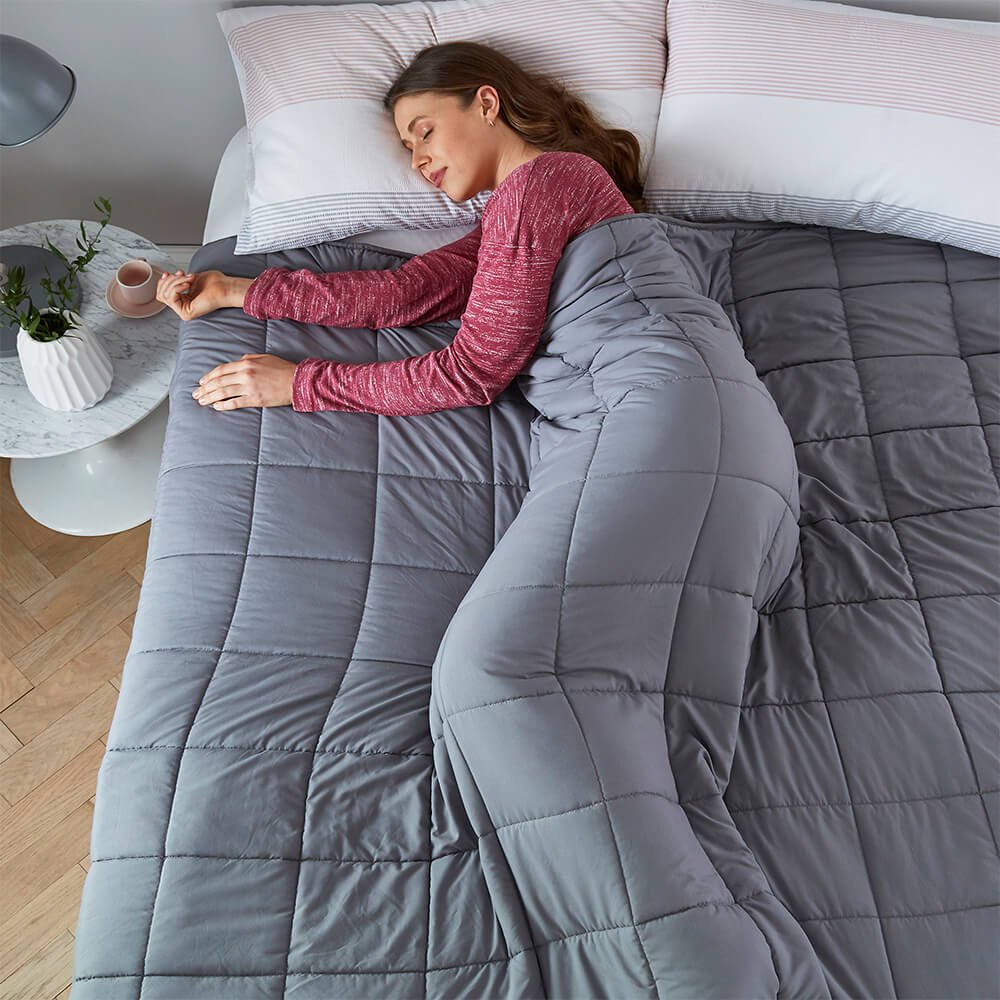
Then I bought a weighted blanket.
Not just any weighted blanket. A 25-pound monster recommended by a sleep influencer on Instagram whose entire brand was "sleep optimization." I hate that word. I hate it so much. But I was tired — ironically — and Mike said "why not, it's on sale at the Boulder REI." So I brought it home.
The first night, I slept for nine hours and twenty minutes. That had happened maybe four times in the previous two years. I woke up feeling like I had been reborn. I texted my colleague at the CU Boulder Sleep Lab: "Weighted blankets are legit. Data incoming."
The second night, same thing. Nine hours. Deep sleep percentage up 12% according to my fitness watch. I was ready to write a paper.
The third night, I woke up at 3 AM with my right arm completely numb. Not "fell asleep" numb. "Something is wrong" numb. I shook it out, rolled over, went back to sleep. Woke up at 7:30 with a shoulder ache that felt like I had been bench-pressing my own body weight.
By the fifth night, the numbness was joined by a crick in my neck that made turning my head feel like a mechanical failure. By the seventh night, I was waking up three times a night to adjust the blanket, the temperature, my position, anything to get comfortable. My 847-morning streak was in ruins. My average sleep quality dropped from 7.2 to 4.8. I was groggy. I was irritable. I snapped at Leo over cereal.
Here's the thing about weighted blankets. The research is real. A 2020 study in the Journal of Clinical Sleep Medicine showed they can increase melatonin and reduce sleep movement. But that study used 12-pound blankets. Not 25. And it didn't account for people who sleep on their sides, or people with existing shoulder issues, or people who — and this is important — live in Boulder, Colorado, where summer nights are already warm enough without adding a personal gravity field.
I threw the blanket off the bed on night eight. Literally threw it. It landed in the corner with a thud that woke Mike up. He didn't even ask. He just said "good" and rolled back over.
It took four days for my sleep to recover. Four days to get back to my baseline. My 847-morning dataset now has a crater in it, a seven-day anomaly that I will have to explain in every future analysis. "Subject experienced intervention-related sleep disruption due to excessive blanket weight." That's how I'll write it up. Sounds so much better than "I bought a stupid heavy blanket because an influencer told me to."
The worst part? I knew better. I literally research sleep for a living. I have given talks about how individual variation in sleep needs makes universal recommendations impossible. I have told clients — hundreds of clients — that what works for one person might wreck another. And then I ignored my own advice because the blanket was on sale and had 4.8 stars on Amazon.
I went back to my data. The 847 mornings. I filtered for the best 100 nights. Average bedtime: 10:52 PM. Average wake time: 6:15 AM. Average room temperature: 65°F. No caffeine after 1 PM on 94% of those nights. No screens in the bedroom on 71% of them. And not a single weighted blanket in sight.
What did I actually learn from 847 mornings? Not that there's a magic product. Not that there's a perfect routine. I learned that consistency beats intensity every single time. I learned that my body wants what it wants — a cool room, a regular schedule, and the absence of twenty-five pounds of synthetic beads crushing my joints. I learned that the best sleep advice is boring, and that boring is exactly what most of us need.
I also learned that sleep influencers are not sleep scientists. That should have been obvious. I knew it was obvious. But at 9 PM on a Tuesday, scrolling my phone in bed — another habit that appears in exactly zero of my top 100 nights — it didn't feel obvious. It felt like hope. And hope, when it comes to sleep, is a dangerous thing to sell.
I gave the blanket to a friend. She loves it. Sleeps like a rock. Side-sleeper, no shoulder issues, lives in a basement apartment that stays 60 degrees year-round. Perfect candidate. I'm happy for her. I'm also happy to have my data back.
If you're tracking your sleep — and I hope you are, because the data is genuinely useful — don't let anyone sell you a shortcut. Not a blanket, not a supplement, not a $400 pillow. Track the boring stuff. The temperature. The timing. The caffeine. The screens. Do it for 847 mornings. Then look at your own numbers and tell me what you need. I guarantee it won't be a weighted blanket.
— Sarah, from a blanket-free bed in Boulder
P.S. My shoulder still hurts a little. It's been three weeks. I'm not bitter. I'm just... data-driven.
